Binge Eating and Body Image: What Do Young Adults Need to Know and How to Manage It?

By Lynn Monzer
3rd year med student | Saint Joseph University
Body image concerns and binge eating behaviors are increasingly common among young adults. Social media, academic stress, unrealistic beauty standards, and emotional challenges can influence the way individuals perceive their bodies and their relationship with food. Understanding binge eating and body image is essential for promoting both physical and mental well-being.
What is binge eating?
Binge Eating Disorder is estimated to affect approximately 1–3% of the general population and is considered the most common eating disorder worldwide.
Binge eating refers to episodes of consuming unusually large amounts of food within a relatively short period while experiencing a sense of loss of control overeating. During these episodes, individuals often feel unable to stop eating or control what or how much they are eating. Unlike other eating disorders, binge eating episodes are not regularly followed by compensatory behaviors such as self-induced vomiting or excessive exercise.
It is important to distinguish binge eating from occasional overeating. While many people may eat more than usual during celebrations, holidays, or social gatherings, binge eating is characterized by recurrent episodes of consuming an objectively large amount of food within a short period, accompanied by a profound sense of losing control over one’s eating. During these episodes, individuals may feel as though they cannot stop eating, even when they no longer feel physically hungry. They often continue eating despite discomfort and may temporarily lose awareness of their body’s normal hunger and fullness signals. Afterward, feelings of guilt, shame, or distress are common, which may contribute to a recurring cycle of binge eating.
Binge eating is influenced by a combination of psychological, emotional, biological, and environmental factors. Stress, anxiety, low self-esteem, body dissatisfaction, and restrictive dieting can all increase the likelihood of binge eating episodes. Over time, these behaviors can negatively affect both physical health and emotional well-being.
What is body image?
Body image refers to the thoughts, feelings, and perceptions a person has about their physical appearance. A positive body image involves accepting and respecting one’s body, while a negative body image may involve dissatisfaction, excessive concern about weight or shape, and frequent comparison with others.
In some individuals, body image concerns may also affect how they perceive their own bodies. They may have difficulty recognizing their actual body size or shape and instead see a distorted image of themselves. For example, some individuals who are underweight or have a healthy body weight may look in the mirror and perceive themselves as overweight or focus excessively on body areas they believe are flawed, even when these concerns are not objectively present. This distorted body perception can contribute to unhealthy dieting behaviors, low self-esteem, and disordered eating patterns.
Young adults are particularly vulnerable to body image concerns due to social pressures, unrealistic beauty standards, media exposure, and the increasing influence of social media. Constant exposure to idealized and often edited images may encourage appearance-based comparisons, making individuals more likely to feel dissatisfied with their own bodies and increasing the risk of developing unhealthy eating behaviors, including binge eating.
How are binge eating and body image related?
Binge eating and body image often influence each other in several ways:
- Dissatisfaction with body shape or weight may increase emotional distress and trigger binge eating episodes.
- Frequent dieting and restrictive eating behaviors may lead to intense hunger and loss of control around food.
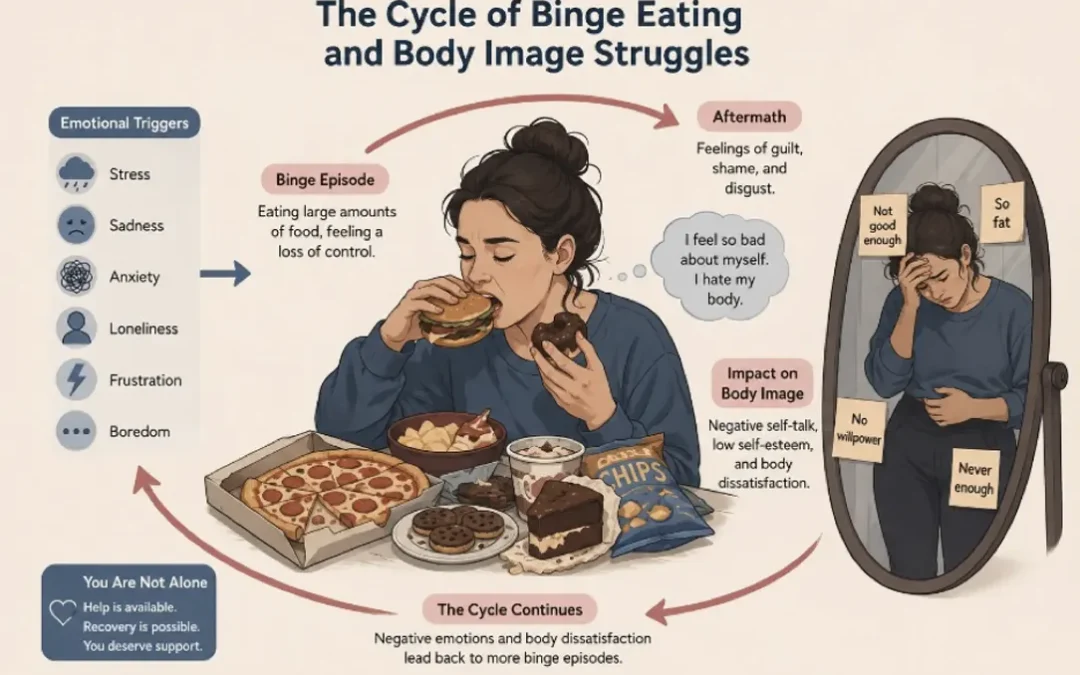
- After a binge episode, feelings of guilt and shame may worsen negative body image.
- Constant comparison with idealized images on social media may contribute to low self-esteem and unhealthy eating behaviors.
- Stress, anxiety, and perfectionism may increase both body dissatisfaction and binge eating tendencies.
These factors can create a cycle in which negative body image contributes to binge eating, and binge eating further reinforces negative feelings about one’s body.
For many individuals, this cycle is further reinforced by restrictive dieting. To lose weight or compensate for a binge episode, they may skip meals, severely limit their food intake, or even starve themselves. Although this restriction may initially feel like a way to regain control, it often leads to intense physical hunger and overwhelming cravings. Eventually, they may experience another binge episode. Some individuals also describe binge eating as a form of self-punishment during periods of emotional distress or low self-worth. The guilt and shame that follow often lead them to promise themselves that they will “eat less” or “start over” the next day, causing the cycle of restriction, binge eating, guilt, and renewed restriction to repeat itself.
How can binge eating and negative body image affect well-being?
When binge eating and body image concerns become frequent, they may affect several aspects of health:
- Emotional distress, guilt, and shame
- Reduced self-confidence and self-esteem
- Increased anxiety and depressive symptoms
- Difficulty concentrating on studies or daily activities
- Unhealthy relationships with food and eating
- Weight fluctuations and reduced quality of life
Following a binge episode, many individuals experience intense feelings of guilt, shame, and self-disgust. They may blame themselves for losing control, criticize their appearance or eating behaviors, and feel disappointed in themselves. Over time, these negative emotions can erode self-confidence, lower self-esteem, and reinforce a negative self-image. As a result, some individuals may belittle themselves or believe they lack willpower, even though binge eating is a complex condition influenced by psychological, emotional, and biological factors rather than a personal weakness.
Furthermore, binge eating disorder is also associated with important physical health consequences. Frequent binge eating may increase the risk of obesity and obesity-related conditions such as type 2 diabetes, hypertension, and dyslipidemia, highlighting the importance of early recognition and appropriate treatment.
What can young adults do to manage binge eating and improve body image?
Developing a healthier relationship with food and body image takes time, but several strategies may help:
- Eat regular meals and avoid skipping meals.
- Recognize emotional triggers that lead to binge eating.
- Practice mindful eating by paying attention to hunger and fullness cues.
- Limit comparisons with others on social media.
- Focus on body functionality rather than appearance alone.
- Engage in regular physical activity for health and enjoyment rather than punishment.
- Practice self-compassion and avoid self-criticism.
Seeking professional support is essential when binge eating or body image concerns become frequent or distressing. Treatment often involves a multidisciplinary approach, including a psychologist and a registered dietitian. Cognitive Behavioral Therapy (CBT) is considered one of the most effective treatments for binge eating disorder, as it helps individuals identify emotional triggers, challenge unhelpful thoughts, develop healthier coping strategies, and break the cycle of binge eating
Conclusion
Binge eating and body image concerns are common challenges among young adults and can significantly affect both mental and physical health. The global prevalence of eating disorders has increased substantially over the past two decades, emphasizing the need for greater awareness, prevention, and early intervention. Understanding the relationship between emotions, eating behaviors, and body perception can help individuals develop healthier coping strategies. By promoting self-acceptance, balanced eating habits, and emotional well-being, young adults can build a more positive and sustainable relationship with both food and their bodies.
References:
- Hilbert A. Binge-eating disorder. Psychiatr Clin North Am. 2019;42(1):33–43. doi:10.1016/j.psc.2018.10.003. https://doi.org/10.1016/j.psc.2018.10.003
- Suhag K, Rauniyar S. Social Media Effects Regarding Eating Disorders and Body Image in Young Adolescents. Cureus. 2024;16(4):e57985. doi:10.7759/cureus.57985. https://pmc.ncbi.nlm.nih.gov/articles/PMC11103119/
- Abdoli M, Schiechtl E, Rosato MS, et al. Body Image, Self-Esteem, Emotion Regulation, and Eating Disorders in Adults: A Systematic Review. Neuropsychiatrie. 2025;39:118–132. doi:10.1007/s40211-025-00544-4. https://link.springer.com/article/10.1007/s40211-025-00544-4