Social Media and Self-Image

By Marita Bassil
Medicine – Saint Joseph University
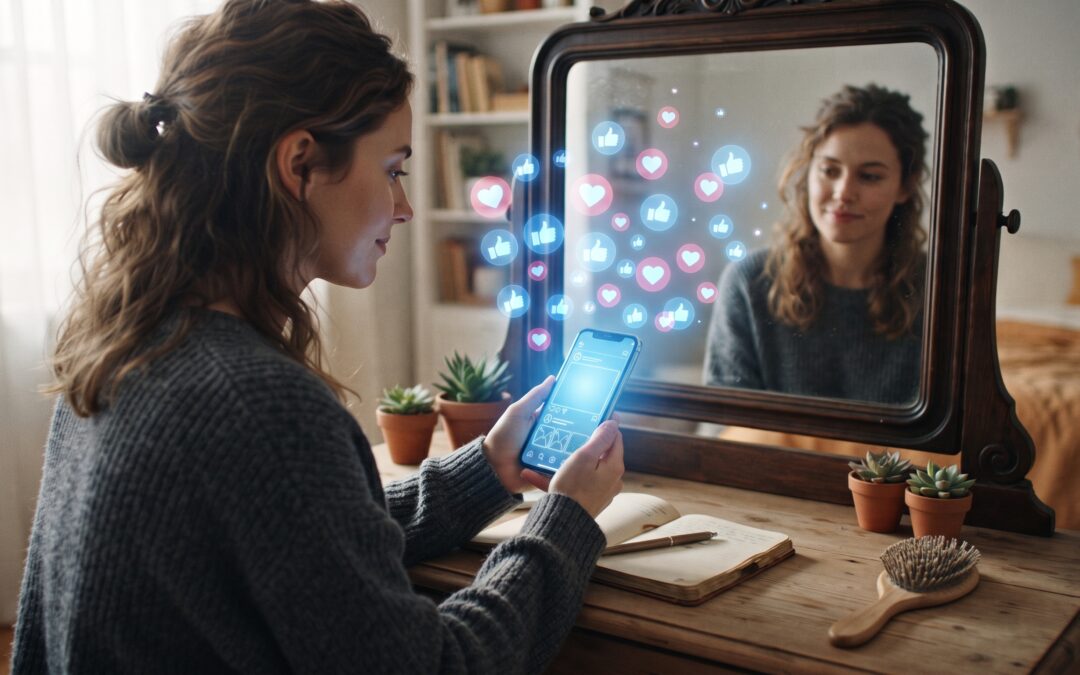
Have you ever finished scrolling through social media and felt that your life was not as exciting, successful, or beautiful as everyone else’s? Perhaps you saw someone celebrating an achievement, sharing holiday pictures, or posting a photo that seemed to reflect the perfect life.
Social media makes it easy to compare ourselves to others, often without realizing how these comparisons influence the way we see ourselves.
When scrolling turns into comparison
Comparing ourselves with others is a natural part of human behavior. It can help us learn and set goals, but social media creates endless opportunities to measure our lives against those of others.
Online, we often see carefully selected moments: achievements, celebrations, and flattering photographs. We rarely see the full story behind them. Moreover, not everything we see online is genuine or reliable. Images may be edited, lifestyles exaggerated, and information presented in misleading ways. Comparing ourselves with content that does not reflect reality can create unrealistic expectations and unnecessary feelings of inadequacy.
Research suggests that comparing ourselves with others on social media is associated with lower self-esteem and depressive symptoms.¹˒² Repeated exposure to idealised appearances and lifestyles may also influence how we evaluate ourselves. However, online content represents only part of people’s life, not a complete picture of their experiences or well-being.
Understanding our own journey
Everyone has different opportunities, challenges, and priorities. Yet, when we see others reaching milestones, it is easy to question our own progress or feel dissatisfied with where we are.
These comparisons can cause us to overlook our achievements and focus instead on what we believe we lack. Recognising that people follow different paths can help us develop a more balanced perspective. Personal growth does not follow a universal timeline, and someone else’s success does not diminish our own.
Building healthier social media habits
Developing a healthier relationship with social media starts with noticing how certain content makes us feel. If particular accounts repeatedly trigger insecurity or dissatisfaction, muting or unfollowing them may help. Choosing content that informs, inspires, or creates meaningful connections can also make our online experiences more positive. Making time for offline relationships, hobbies, and activities we enjoy can help us maintain perspective. Setting personal goals based on our own interests and circumstances, rather than external expectations, allows us to focus on progress that genuinely matters to us.
If comparison-related feelings become persistent or begin affecting daily life, speaking to someone we trust or seeking professional support may be beneficial.
Finding balance beyond the screen
Social media can offer connection, inspiration, and valuable opportunities to learn. However, it should not become the standard against which we measure our lives. Understanding the limitations of online content and recognising our individual circumstances can help us build a healthier self-image.
Ultimately, what we see online is a collection of moments, not the entirety of someone’s life. Keeping this in mind can help us approach social media more consciously and view ourselves with greater balance and understanding.
8 Key Reminders
- Social media shows selected moments, not entire lives.
- Social comparison can influence self-esteem and body image.
- Everyone has different circumstances and timelines.
- Another person’s success does not diminish your own.
- Choose content that supports your well-being.
- Make time for meaningful offline experiences.
- Recognise your progress, even when it seems small.
- Seek support when negative feelings persist.
References:
- References
- Le Blanc-Brillon, J., Fortin, J.-S., Lafrance, L., & Hétu, S. (2025). The associations between social comparison on social media and young adults’ mental health. Frontiers in Psychology, 16, Article 1597241. https://doi.org/10.3389/fpsyg.2025.1597241
Free full text: https://pmc.ncbi.nlm.nih.gov/articles/PMC12370522/
- Bonfanti, R. C., et al. (2025). The association between social comparison in social media, body image concerns and eating disorder symptoms: A systematic review and meta-analysis. Body Image, 52, 101841. https://doi.org/10.1016/j.bodyim.2024.101841