Behind Screen: How Cyberbullying Damages Relationships

By Nourhanne Ajaj
Translation | Saint Joseph University
The harm caused by online harassment does not stay online. It can follow people into their friendships, relationships, and everyday lives.
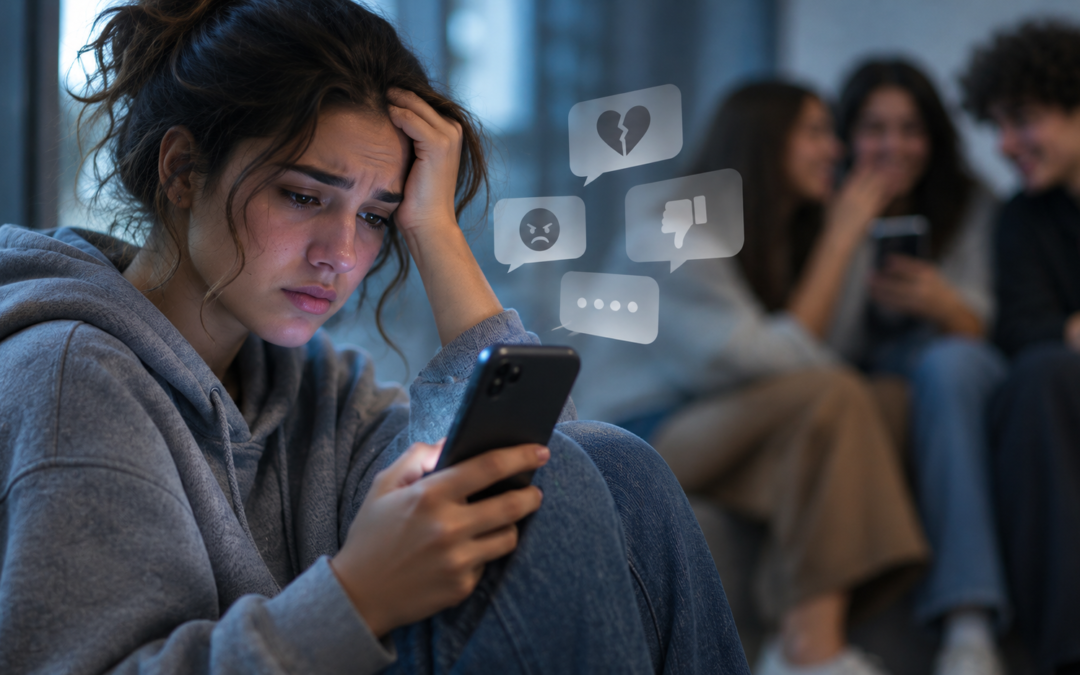
Social media has made it easier than ever to connect, communicate, and share our lives with others. Yet, behind screens and seemingly harmless comments, online interactions can sometimes become a source of humiliation, fear, and emotional distress. Cyberbullying is not simply an online disagreement; it can undermine trust, damage relationships, and affect a person’s sense of safety and self-worth.
When Online Behavior Becomes Harmful
Cyberbullying involves using digital technologies to repeatedly intimidate, threaten, humiliate, or hurt another person. It can take many forms, including spreading rumors, sharing private messages without consent, posting embarrassing photos, sending threatening messages, or creating fake accounts to damage someone’s reputation (UNICEF, n.d.).
Sometimes, harmful behavior is dismissed as a joke. However, a joke stops being harmless when it humiliates someone, violates their boundaries, or continues despite their discomfort. The fact that something happens behind a screen does not make it less hurtful.
The Impact on Our Relationships
One of the most damaging consequences of cyberbullying is the way it affects relationships. Imagine discovering that a trusted friend has shared a private conversation with others, or that someone you care about is using social media to embarrass or control you. Such experiences can weaken trust and make it difficult to feel safe with others.
Cyberbullying can also lead to isolation. People who are targeted may withdraw from friends, avoid social gatherings, or become afraid to express themselves online. They may question their worth or wonder whom they can trust. The World Health Organization identifies bullying and violence among the factors that can threaten adolescents’ mental health. (WHO, 2025).
Moreover, bystanders can influence what happens next. Laughing at humiliating posts, sharing hurtful content, or remaining silent when someone needs support can allow the harm spread. In contrast, offering support and refusing to participate can help create a safer environment.
Prevention Starts with Us
Preventing cyberbullying requires more than telling people to be careful online. It means building relationships based on respect, empathy, consent, and accountability.
Before posting or forwarding content about someone, ask yourself: Would I say this to their face? Could this embarrass or harm them? Do I have their permission to share it?
If you experience cyberbullying, remember that you do not have to handle it alone. Save relevant messages or screenshots, report abusive content to the platform, and block the account if necessary. Speak to someone you trust, such as a friend, family member, teacher, or counselor. If a friend is being targeted, listen without judgment, offer support, and avoid sharing the harmful content further (StopBullying.gov, 2024).
Most importantly, do not confuse kindness with silence. Standing up against cyberbullying does not always mean confronting the aggressor directly; sometimes, it means supporting the person affected and helping them find appropriate assistance.
Beyond the Screen
Our online behavior reflects the values we bring into our relationships. A comment, screenshot, or shared post may take seconds to publish, but its consequences can last much longer.
Creating safer digital spaces begins with everyday choices: respecting boundaries, protecting privacy, thinking before posting, and speaking up when someone is being harmed. Behind every screen is a real person whose dignity deserves respect. The question is not only how we want to be treated online, but also what kind of person we choose to be when no one is watching.
Key Points
- Cyberbullying can damage trust and relationships.
- Sharing private messages without consent can cause harm.
- Online humiliation can affect mental well-being.
- A joke is not harmless when it repeatedly hurts someone.
- Think before posting, commenting, or sharing.
- Save evidence, report abuse, and seek support.
- Choose empathy over silence and respect over humiliation.
References:
- UNICEF. (n.d.). Cyberbullying: What is it and how to stop it.
UNICEF — Cyberbullying: What is it and how to stop it - World Health Organization. (2025, September 1). Mental health of adolescents.
WHO — Mental Health of Adolescents - StopBullying.gov. (2024, December 11). Report Cyberbullying.
StopBullying.gov — Report Cyberbullying